1K or 2K: what it means and when to use each one
One-component or two-component: the difference lies in how it dries, and that determines resistance, times and how it is worked.
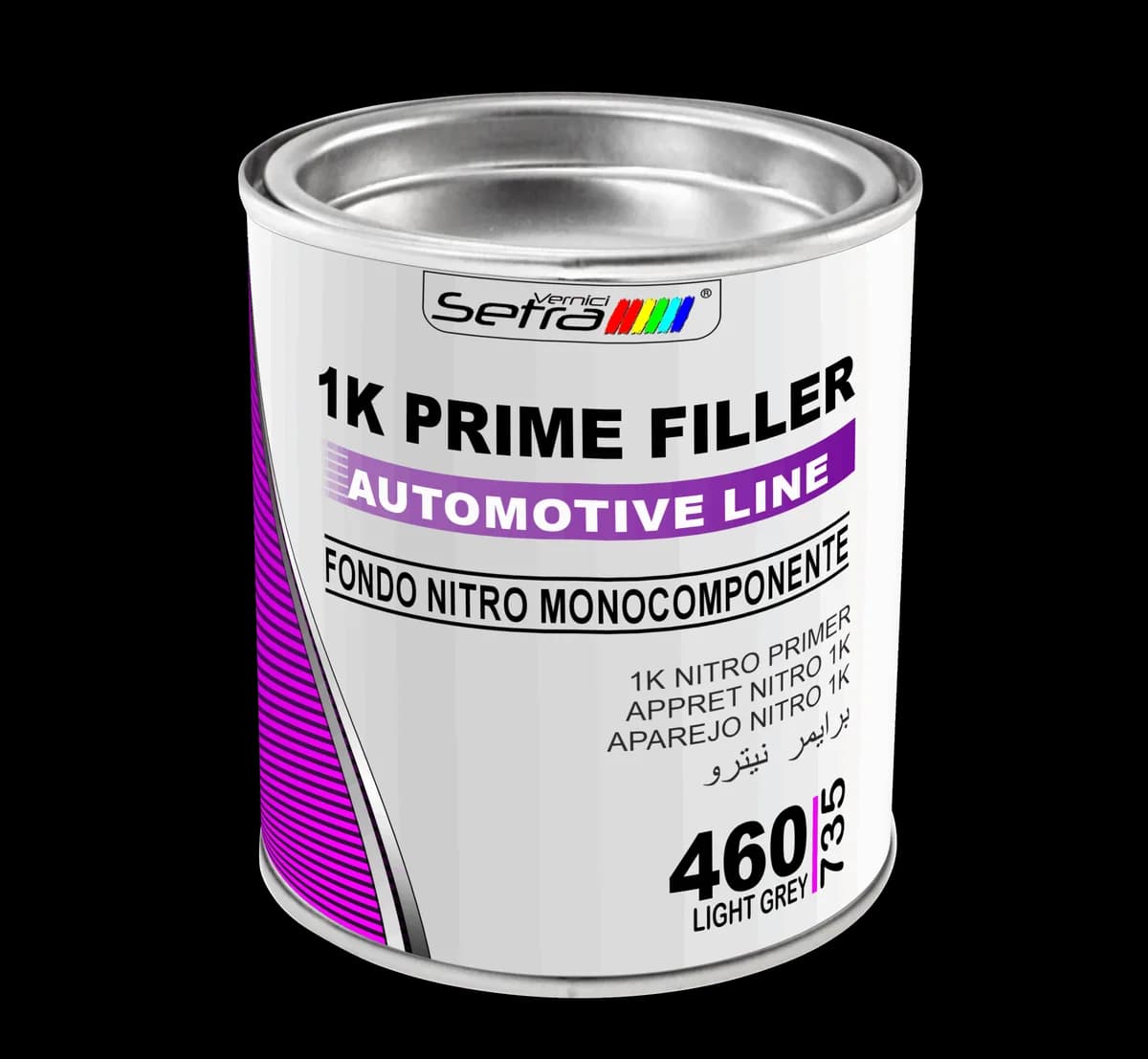
A 1K product (single-component) is applied as supplied, or thinned if the data sheet says so. It dries by evaporation of the solvent or water: there is no chemical reaction. It is fast and simple, and can be redissolved with the same solvent.
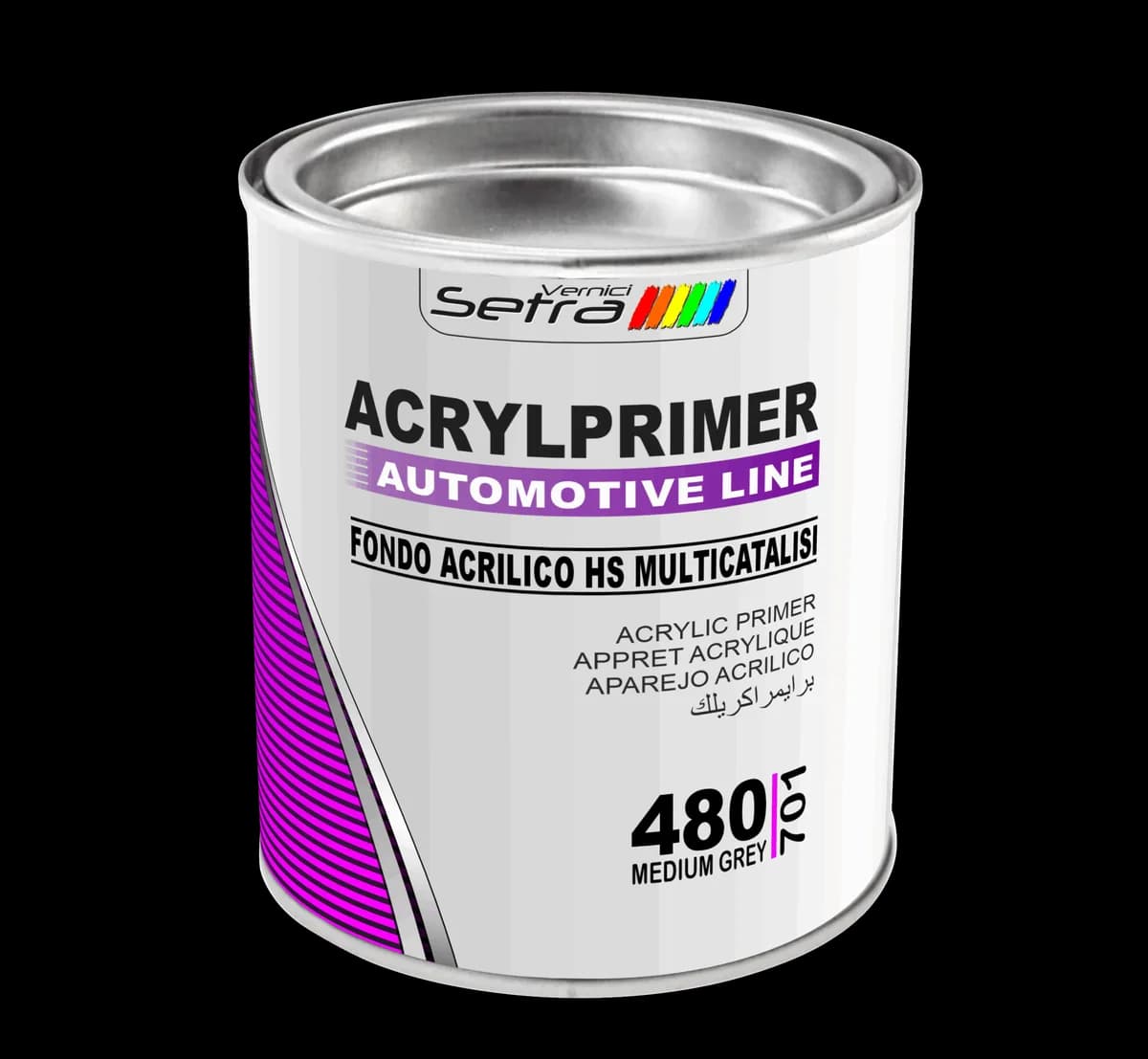
A 2K product (two-component) is mixed with a catalyst (hardener) in the ratio given on the technical data sheet, for example 2:1 or 4:1. Once mixed, a chemical reaction starts and produces a harder film that is more resistant to solvents, petrol and weathering.
What changes on the job
- Pot life. A mixed 2K has a limited pot life, from minutes to hours depending on the product. Leftover material cannot be stored.
- Mixing ratio and thinner. The mixing ratio is the one stated on the data sheet, with no adjustments. The thinner is added after mixing, at the percentage indicated.
- Drying. A 1K air-dries quickly; a 2K dries to the touch and continues to harden for hours or days.
- Cleaning. Tools used with 2K are cleaned before it hardens; afterwards, no solvent can remove it.
When to use each one
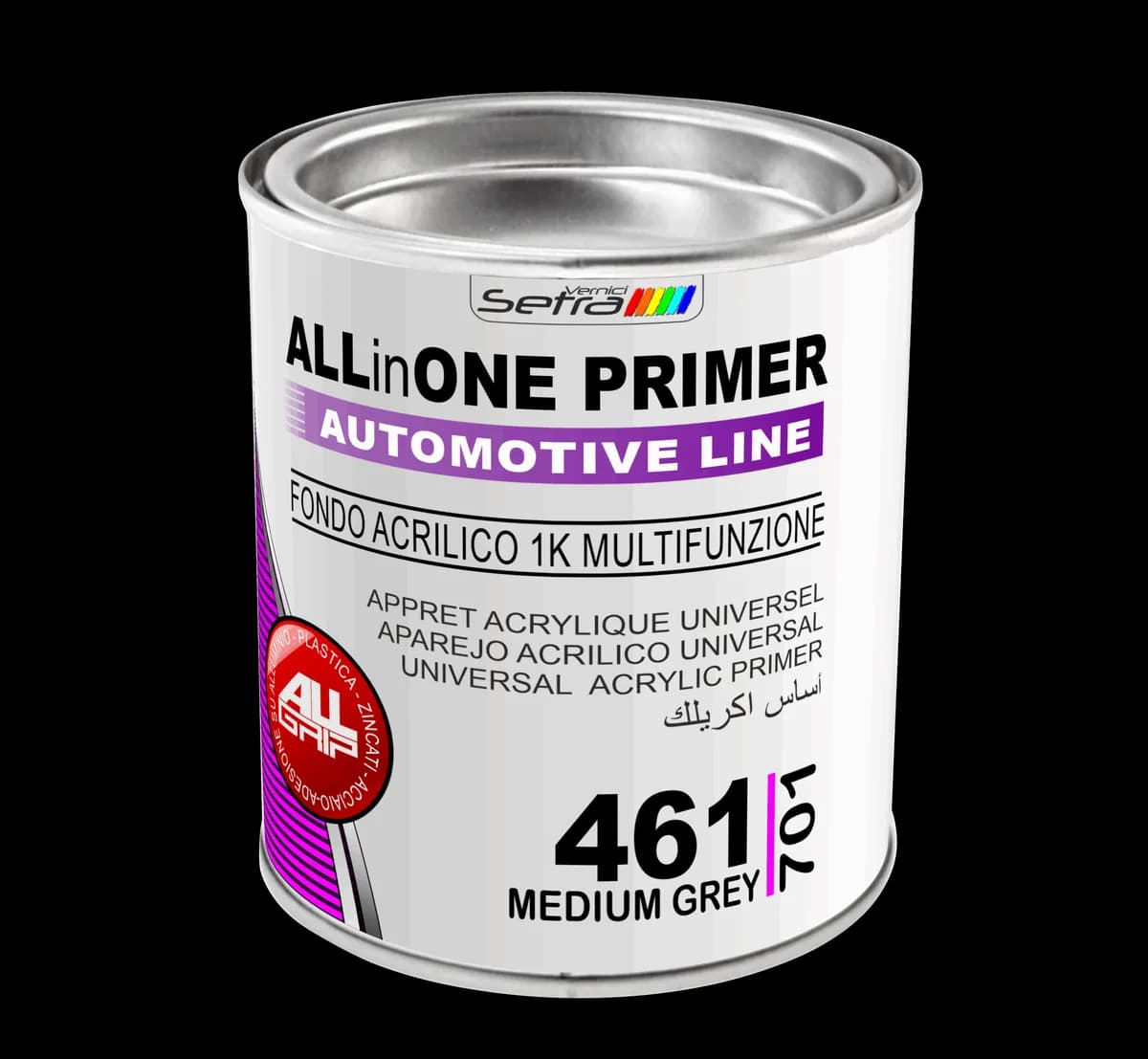
1K is suitable for fast-adhesion primers, finishes where speed is a priority and touch-ups. 2K is the standard in surfacers, clearcoats and topcoats that have to stand up: it is what a complete body repair uses.
HS and UHS
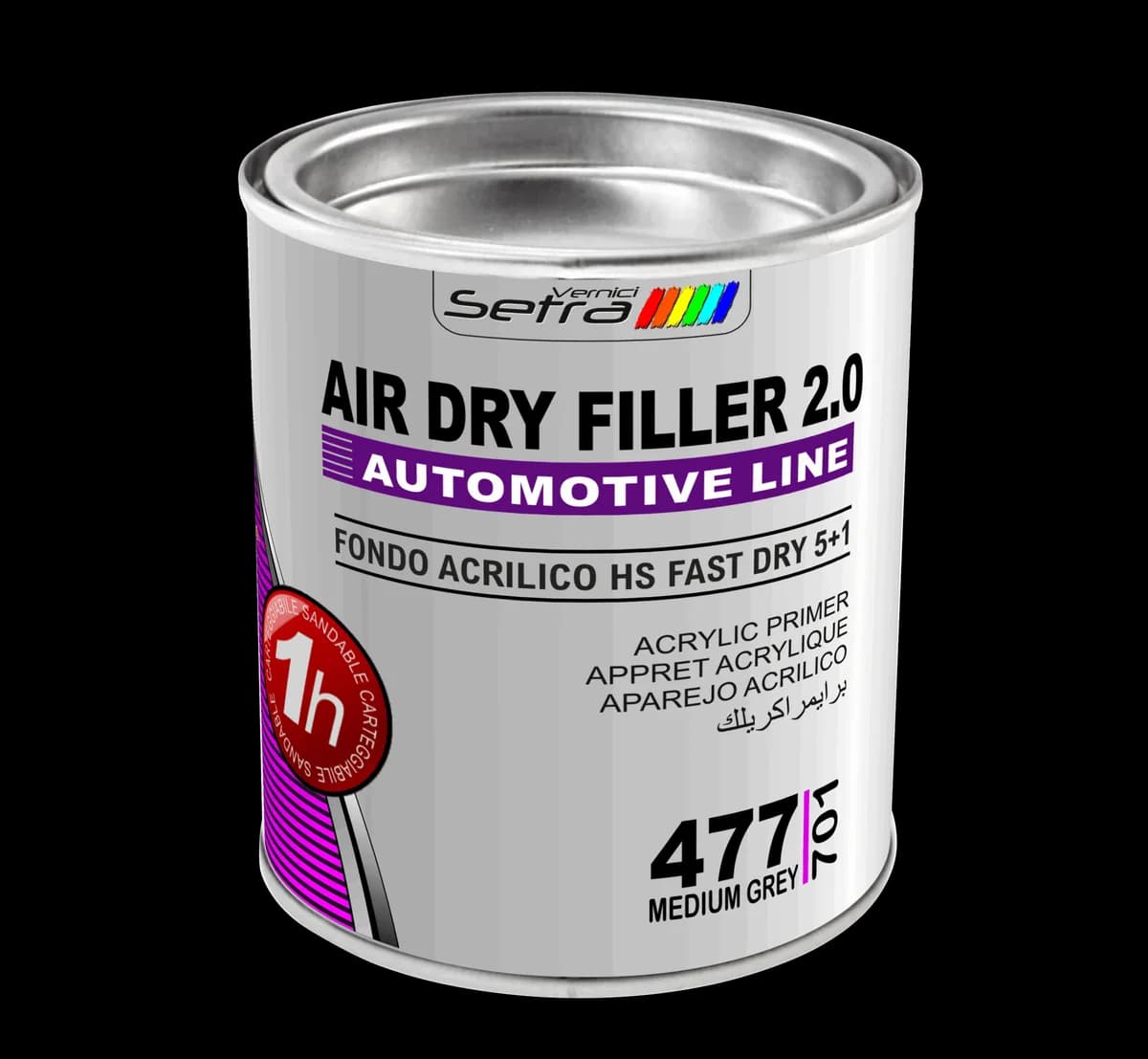
They are abbreviations for High Solids and Ultra High Solids: higher solids content and less solvent. They cover more with fewer coats and emit fewer volatile organic compounds (COV). The trade-off is that they require respecting the flash-off times between coats.
The technical data sheet for each product gives the mixing ratio, the thinner, the pot life and the times. It always takes precedence over this guide.